
On creative spaces, artistic survival and Sara Baume

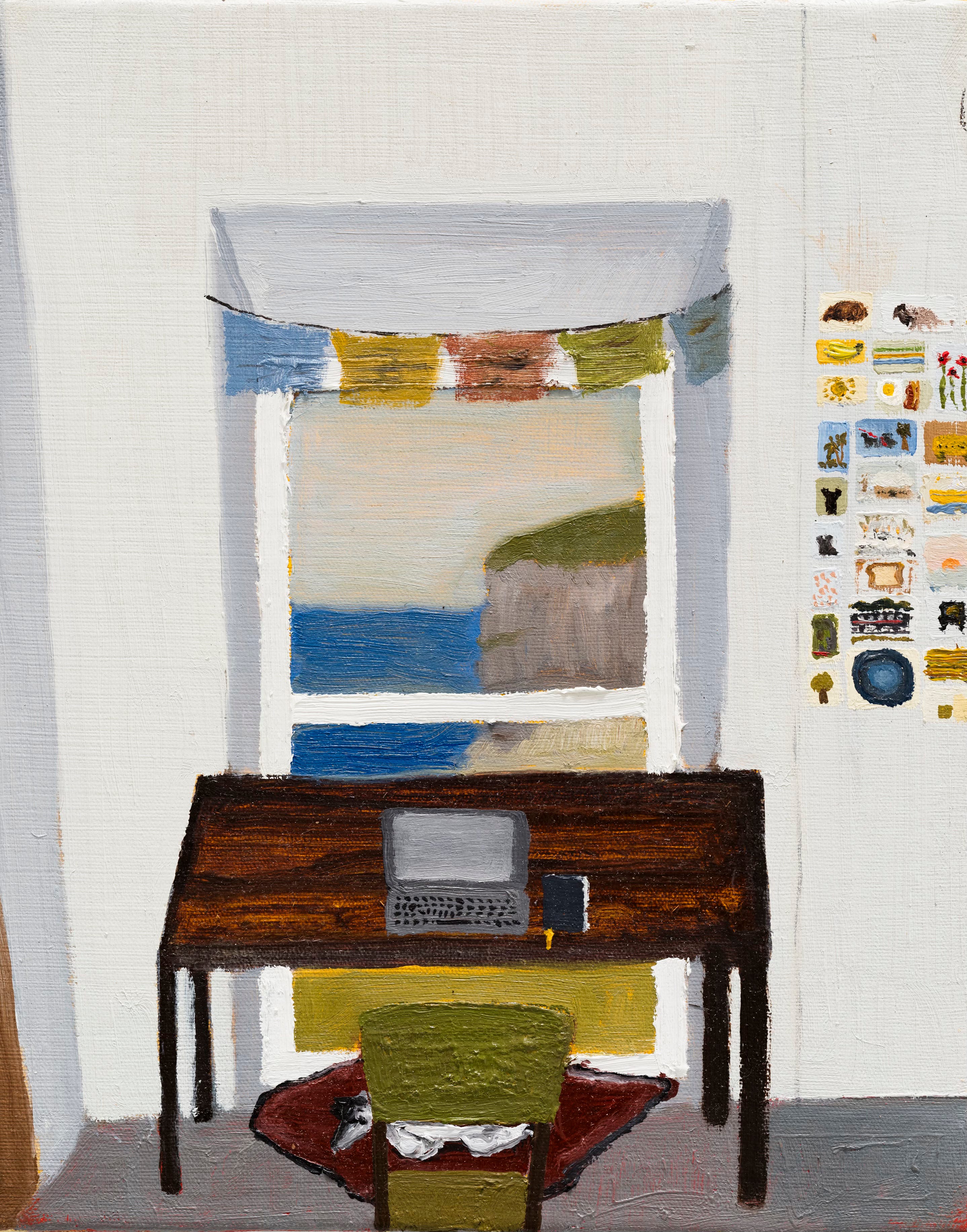
I frequently wonder about where people make their creative work. The desks, studios, bedrooms, libraries. Some years back, I ran a blog called Musical Rooms, where I interviewed musicians about this very thing. The answers were as broad as they were interesting, mainly because not everyone had the means or money to use studios or rehearsal rooms.
I do not have a writing room of my own, which I am fine with. I have learned to navigate the interruptions, while reminding myself every day of the privilege of having somewhere to live. I thought again of the line early on in Deborah Levy’s The Cost of Living where, after major personal and housing upheaval she glumly declares: “But I had nowhere to write:” Enter Celia, an 80-something actor/bookseller, and widow of the poet Adrian Mitchell. This woman, who Levy calls her “guardian angel”, agrees to rent Levy the shed in her garden once used by her late husband. It is cold, dusty, with a mud floor and garlands of spider webs. Beside the desk is a freezer crammed with tubs of frozen apples, which, prior to this resting place, fall from the tree outside in Autumn and clatter explosively against the roof.
Celia begins to introduce Levy to her friends as ‘She Who Lurks in the Garden’, but she also acts as a steadfast guard against any interruptions. “To be valued and respected in this way, as if it were the most normal thing in the world, was a new experience.”
Earlier this year when I read Sara Baume’s extraordinary Opening Night, Musical Rooms and Levy’s shed drifted back to me. I spoke to Sara for last Saturday’s Irish Times and you can read the full piece below.
Baume lives in rural West Cork, writing and making art. One evening, at an exhibition out the back of a neighbour’s house, she encounters the work of American painter Mollie Douthit, who has moved across the Atlantic to Ireland. Mollie lives a solitary life, and Baume is immediately intrigued. What follows is the beginning of a tentative friendship; of sea swims, conversations about art and ambivalence about motherhood, which represents for both, a possible swerve off the path of their individual practices.
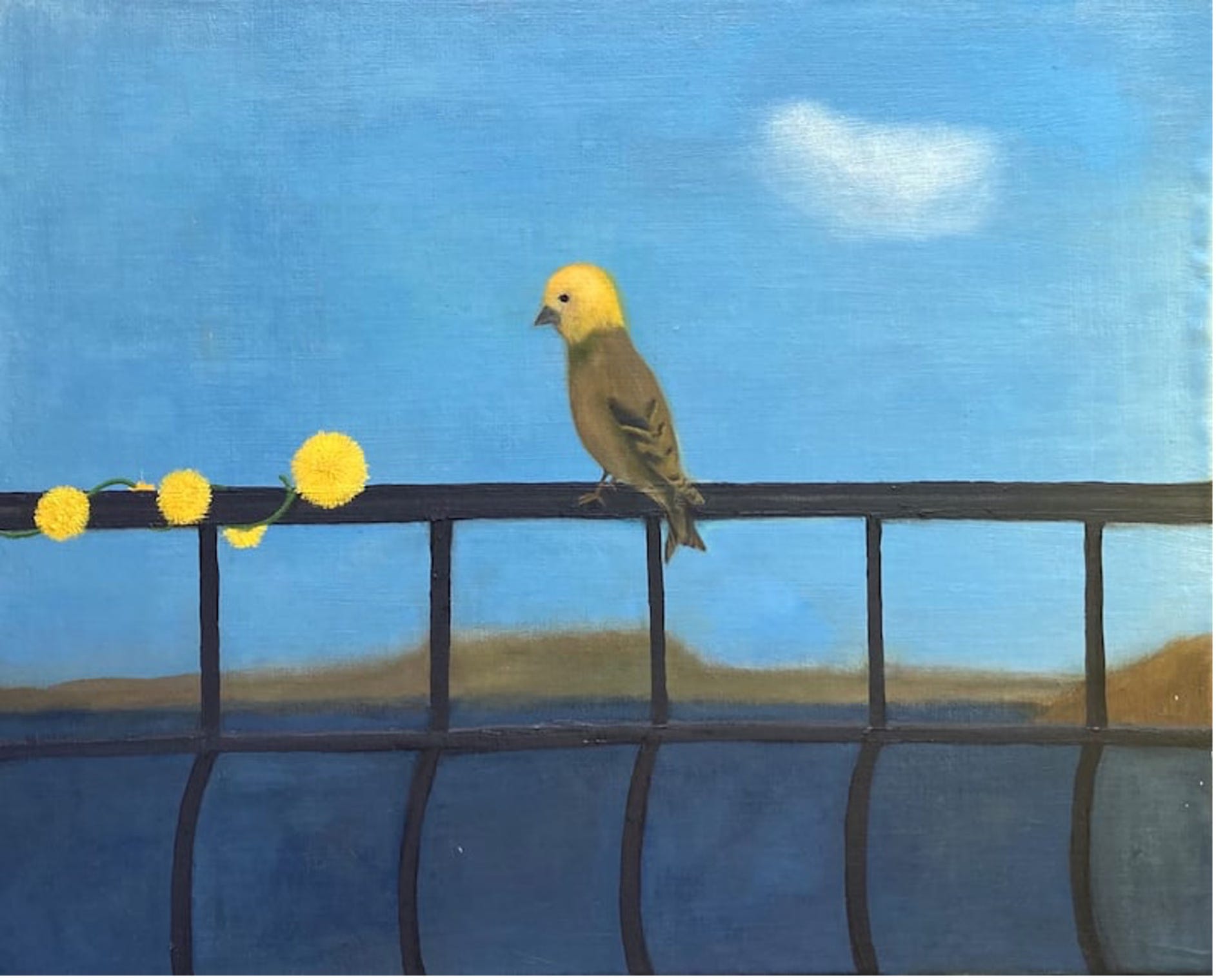
Opening Night is excellent on friendship, something – in life or literature - not often elevated to the same stature as relationships. When they end, the implosion can be as devastating and hurtful as a break-up. The bond formed between Baume and Douthit is a kind of chosen family. It asks questions of who real friends are, and who consistently shows up in friendship, not just in the good times. As we age, people drift away, rearrange their priorities, or prefer to ghost instead of a having a difficult conversation. As Baume says in the interview, “You realise who are the people that you actually want to have around as you get older.”
The thread that most stood out – and again brought me back to The Cost of Living - was the money/time conundrum. Of trying to find headspace and hours outside of parenting, working, care work and other daily obligations; and the necessity of a physical space – a dedicated place - to make the work.
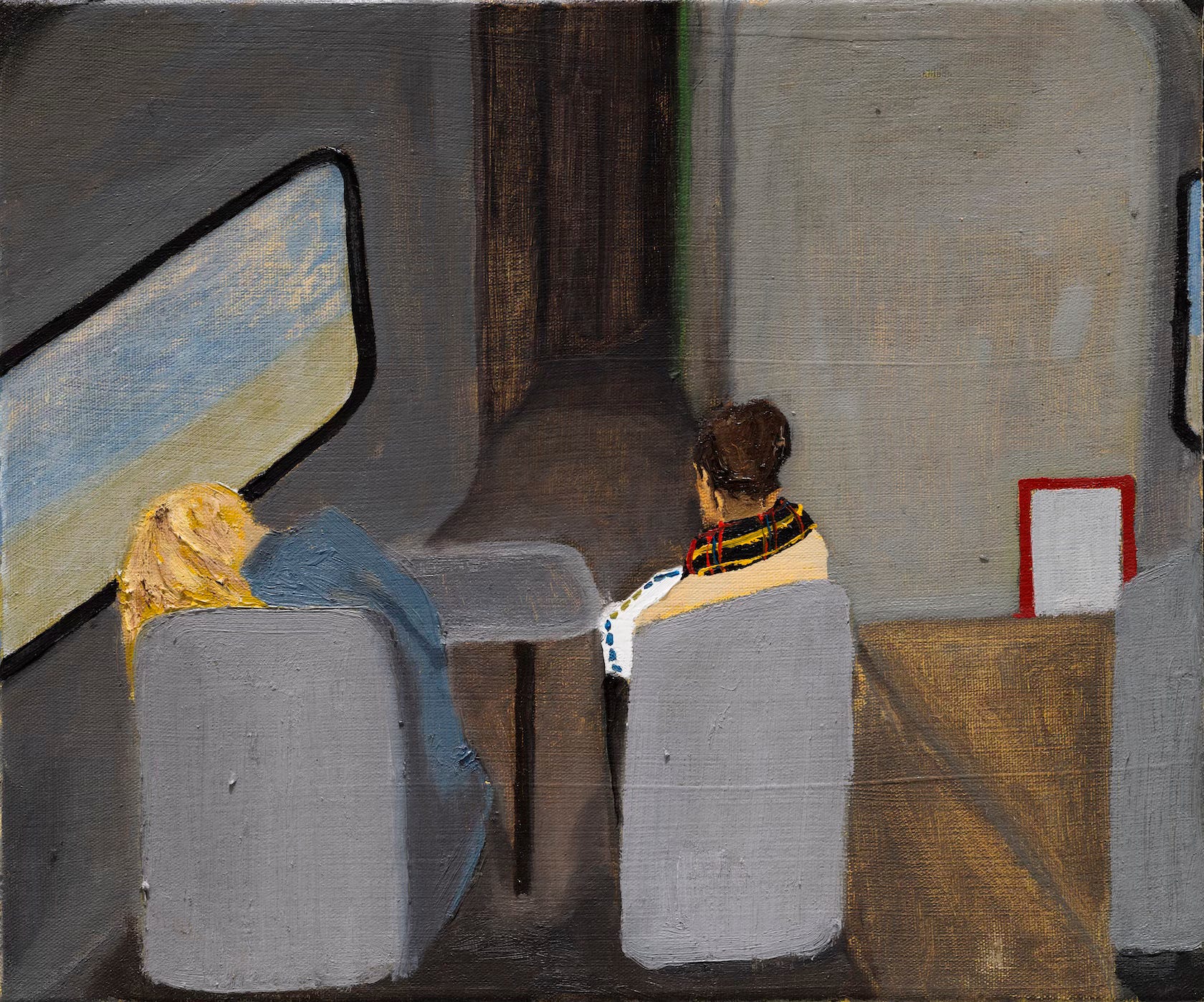
Baume lives in West Cork by the sea, a location that has filtered into her fiction and non-fiction. This set-up is possible due to a kind landlord, who charges rent far below the market standard for such a location. The dawning realisation of Opening Night for both reader and the author herself, is that Baume will eventually be unable to live there. West Cork, which was always a beacon for artists, musicians and writers from all over the world, is being demographically replaced by second-homers, or, as Baume says in the interview: “people buying their second and third homes, the kind of people who can afford to buy paintings.”
Below is the full interview, where Baume also talks about the necessity of funding the arts, the new lottery-based Basic Income for the Arts and her fears for the future.
I have read very little this year, (time v work v obligation, a similar quandary to the one that Baume talks about), but this is my non-fiction book of the year so far.
Opening Night is published this week by Granta.
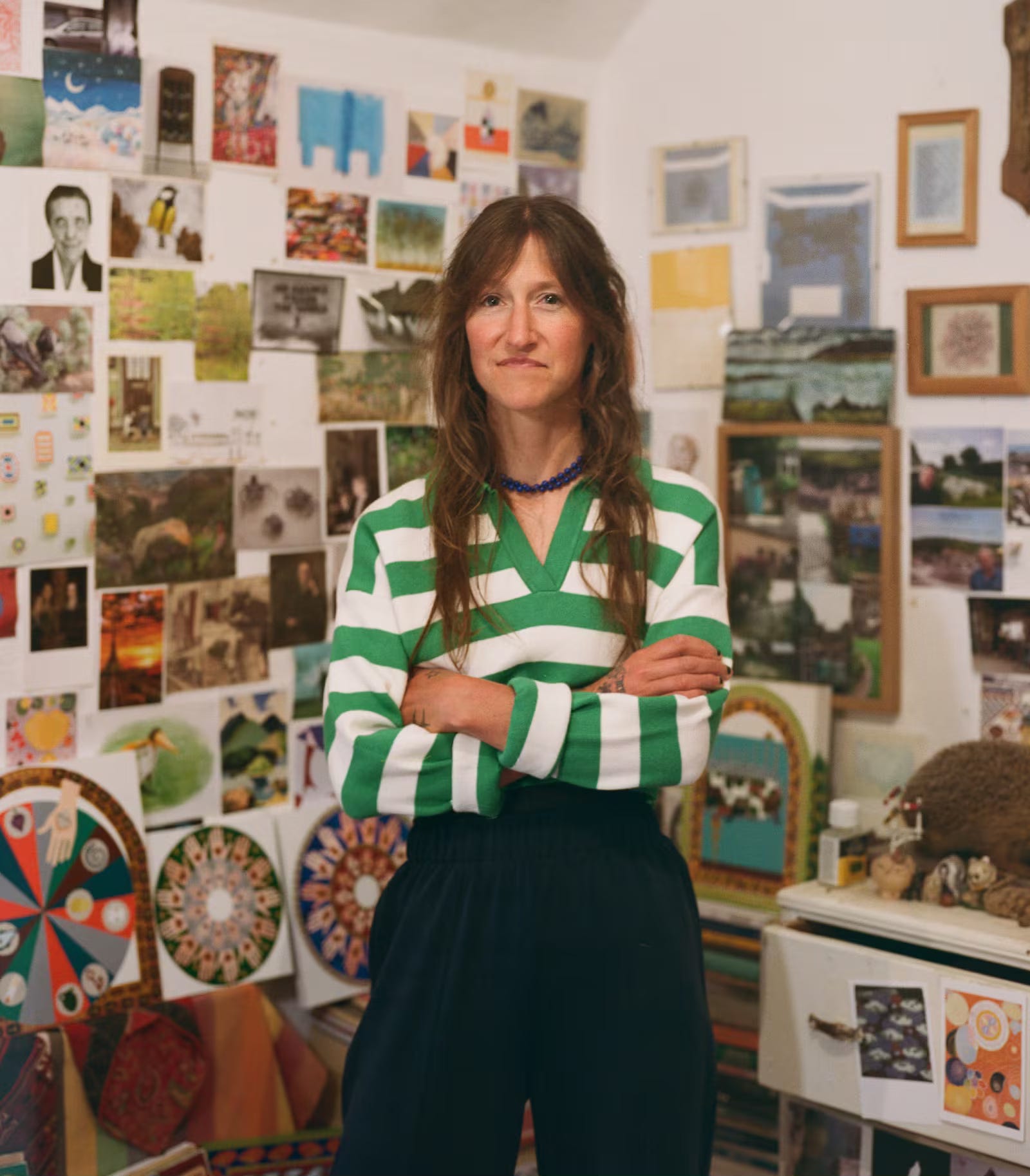
In 2021 writer and artist Sara Baume attended a group exhibition not far from where she lives in west Cork. Two works stood out by the same artist, an American painter who lived nearby but wasn’t in attendance. Curious, Baume searched for the artist, Mollie Douthit, on Instagram and the two began a tentative digital friendship.
Before long they began to meet regularly in person, to swim and for discussions about their creative projects. “Mollie was living on her own in this little wooden cabin at the end of a long driveway,” says Baume, “and I was very intrigued by how she lived. I had been looking at her paintings online and we’d built up a friendship. She then asked me to write about her work for an exhibition. Several of the pieces were about where she grew up in America, and the content of her paintings is storytelling. Once I started writing, I felt like there was so much more in this … that it could be several pieces of writing, if not a whole book.”
The protagonists of Baume’s books – fiction and nonfiction – skew a line between craving solitude and company. In Spill Simmer Falter Wither, the companion is a dog. In Seven Steeples, a boyfriend; in Handiwork, her real-life artist partner Mark Beatty. That her new book, Opening Night, is about a significant relationship with another person provides a continuum.
Where it differs is the unexpected nature of it, and the impact this has on Baume, who has constructed a pared-down life of routines to facilitate her art and writing. The book explores the wariness and excitement of a new friendship, something that was unlooked for, but also the interruption it brings – to her practice, habits and general solitude. But slowly, as their meetings increase, there is a realisation that perhaps through distance and age, a close friendship was missing from Baume’s life.
“I wasn’t really looking for a friend, but I realise that all my friends are based elsewhere,” she says. “Because I live in west Cork, there’s no one I hang out with on a regular basis, and I don’t do a lot of socialising except for the occasional cultural event. Mollie didn’t have a car so I starting giving her lifts … and then we committed to doing this monthly swim together. It was actually a way to force us to maintain a friendship and, in the end, there was very little actual swimming involved – it was more about spending time together. I also spent a lot of time sitting in the car park in SuperValu in Skibbereen waiting for Mollie to do her shopping,” she says, laughing.
As well writing, Baume is also a visual artist and often documents her sculpture (birds, container ships) and embroidery on her Instagram account. She is not a painter, and believes this might be one of the reasons she was drawn to Douthit’s paintings, which feature throughout the book.
“The two works that were in that exhibition both depicted rooms without any people in them. Initially I liked them because they were small. There is a kind of an intimacy about them … and a strangeness. I’ve made art and drawn over the years, but I’ve never painted. At this point in my life, painters are really fascinating. Perhaps because of the limitations of their medium, they seem really intense. And although Mollie has the training and ability to paint in a classical way, she chooses to focus on the expression of feelings and atmosphere, rather than to portray a scene that’s perfectly realistic.”
A recurrent thread to the story is Douthit’s experience of increasingly debilitating facial pain. She attends a coterie of doctors, healers and dentists in search of a diagnosis, and is repeatedly met with either dismissal or bafflement. Lifts for grocery trips expand into Baume driving Douthit to various health appointments.
“I’ve always been a hypochondriac, a proper health worrier,” says Baume, “so it freaked me out watching Mollie going through what she was going through. But it was also hugely enlightening. The way Mollie dealt with her chronic pain was the realisation that it was stress-induced, triggered by fear and doubt. So it made me very aware – and sensitive to – how much I’m able to invent problems in my body that aren’t actually there.”
This new connection with Douthit encourages a re-evaluation of past friendships and why some of them didn’t last. For Baume, there was no “great drama”, other than she has always prioritised being solitary and working over the relationships in her life. For similar reasons, she (and Douthit) are ambivalent about motherhood and its obligations, which represents for both a possible swerve off the path of their individual practices.
“There have been a lot of books written on this subject – and I’ve read them, because I’m interested in those narratives of motherhood, but I know that by choice, I’m not going to experience that,” Baume says. “There are always distractions and things that take up our time, and you have to battle through whatever form the obstacle takes. I also wanted to create a different story about being a woman my age, which is about friendship and about trying to focus on your practice.”
Friendships are often not elevated to the same stature as relationships, either in literature or in life. When they end, it can be as devastating and hurtful as a break-up. In Opening Night, the bond formed between the two women is sustaining; an alternative to the bonds of a relationship. A chosen family.
“Someone told me that the book really spoke to them because of this refocusing on friendship at a certain age, when your main relationship or partner is settled,” says Baume. “The older I get, friendship – that kind of space – means more to me. You realise what’s important in life and who are the people that you actually want to have around as you get older.”
Amid the swims and friendship and art, a deeper issue runs through these pages. One that doesn’t discriminate against livelihoods or location, but seems to have a huge impact on the artistic community. Money. The quandary of trying to make art or write, but having bills, a mortgage or rent to pay. The volume or frequency of work goes unmade because of financial commitments and the need to survive day to day. “I’m mid-career,” says Baume, “and you feel like you’re still making good work, maybe even better work, but there’s always the question of ‘How do I compromise myself in order to be able to continue to live?’”
This is a familiar and disheartening refrain from many working in the arts. Baume and her partner, Mark, also an artist, live in west Cork, surrounded by fields and the sea, a landscape that has shown up in all of her books. They live with their dogs in a house that has everything they need, but they don’t own it. She praises their “good landlord” who doesn’t ask for the kind of rent that could be demanded in such a sought-after location.
“West Cork was always a hippie mecca,” she says. “People came from England and Europe and could set themselves up and live artistic lives. In the past, they were able to buy a plot or a shed, and gradually build up their homes or studios – but that’s completely impossible now, and the demographic here is completely different. There’s still a grassroots arts community, but the number is getting smaller all the time. It’s being replaced by people buying their second and third homes, the kind of people who can afford to buy paintings.” She laughs. “It’s gentrification basically, and usually that’s talked about more in the context of cities – but that is completely what has happened here.”
In one memorable scene in the book, Baume and Douthit go swimming in the bay close to where the actor Jeremy Irons lives in a castle (and owns a neighbouring island). Across the waves, Baume bellows, “GIVE US A FEW QUID JEREMY”. Later, there is an encounter with a millionaire, one who buys Douthit’s work and is hard to dislike. Baume describes a “utopian vision of the art world” where all practitioners would be supported by the State and public institutions and “the art they made would be affordable to anybody who sincerely appreciated it”.
One of Douthit’s paintings is of Baume’s writing desk, and later, Baume meets the woman who bought it (something she herself couldn’t afford to). Douthit says she believes Ireland “made her a painter”. “People here seem to understand her painting,” says Baume, “and as a result gave her opportunities.”
The conversation turns to institutional support for artists in Ireland, which has been lauded internationally. Arts Council support is a lifeline for many in the arts here. Both of us admit to knowing people in various disciplines who have either given up their practice, or moved further away from the city to support the work they’re trying to make.
“It’s true, and yet it’s hard to complain about Ireland, especially if you’re in a room of British writers. There are far more supports here, which is great, but I am dismayed by the Basic Income for Arts scheme in that it’s a lottery. It should be means-tested and merit based.”
Does she worry about money, and her survival as a writer and artist?
“I know I’m on borrowed time living in this quiet, bucolic place. Even though I’ve published five books, I’m never going to make a fortune from it. It would be impossible for me to buy property where I live. Next year I’ll be facing into the same quandary of ‘What do I do now?’ Because I certainly won’t have another book written by then.”
As Opening Night progresses, it also becomes clear that Douthit will not be living in west Cork forever. This realisation in the book is touching, not least because it dawns on Baume that Douthit has become her closest friend; “that her daily existence was impossible to separate from my solitary activities, as I had always done before with every friendship”.
There was a friendship, and then there was a book, and both will endure. “In many ways, Mollie is quite similar to me. I was kind of in awe of how she had left her home place and gone so tremendously far away. We’re still very close and talk every day, through messages and voice notes. So I always know how she’s doing, and Opening Night has kept that connection going. I just hope it does her and her paintings justice.”
This article originally appeared in the Irish Times on Saturday June 27th, 2026
Really enjoyed this article. I have read and love Levy's living autobiography trilogy. And Sarah is such a creative force.
Really loved this Sinead, thank you. I had not known of either artist but am glad I do now.